CNSS electronic care claims: what changes for clinics and laboratories in Morocco
Electronic submission is becoming the norm for doctors, pharmacists and laboratories. The important detail: it can happen through the insurer's portal, or through your own software.
What is being rolled out
Dematerialised care claims are progressively replacing paper submission to health-coverage bodies. After a pilot phase the scheme is extending nationally and covers doctors, pharmacists and medical laboratories.
The detail that matters
Two submission routes exist: the portal provided by the coverage body, or the provider's own software. The second option is what actually changes daily work — because re-typing into a portal data that already exists in your system is precisely the work you were trying to remove.
Portal or integration: how to choose
The portal is enough if you submit few claims, if your data is not already structured in software, or if you have no dedicated administrative team.
Integration pays as soon as volume is regular: double entry costs time, creates discrepancies between your billing and what the insurer receives, and makes tracking rejections hard.
What an integration actually involves
- Structuring data on the provider side: procedures, supporting documents, insured identifiers.
- Generating the file in the expected format, with consistency checks before sending.
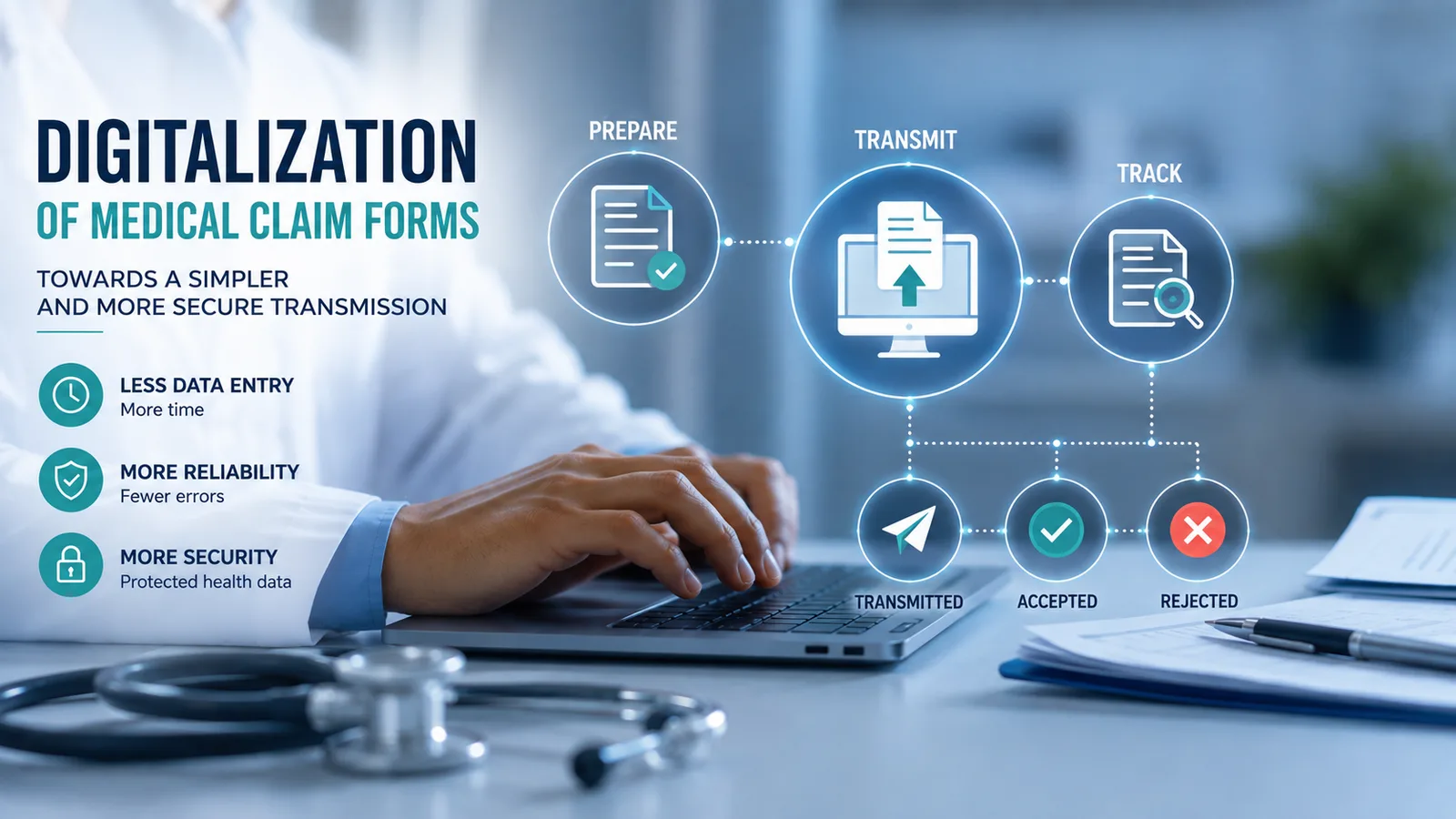
- Tracking states: submitted, accepted, rejected — and being able to act on rejections.
- Logging exchanges, because the data involved is health data.
The CNDP question arrives at the same time
Structuring and transmitting health data is processing of sensitive data under law 09-08. The two projects are better done together: it avoids building an integration you then have to revisit for compliance reasons. See CNDP compliance.
Where to start
With a short scoping engagement: your real volumes, your claim types, what your system can already produce, and what is missing. That scoping is what tells you whether integration is worth its cost for you — the answer is not always yes. See healthcare platforms.
Where it stands
As of September 2026: the scheme is in advanced certification testing with software vendors, and no national rollout date has been announced. The timetable has already slipped several times, so we do not repeat a date — this line is updated when the CNSS communicates. What is settled is the direction: paper-based AMO administration being progressively replaced, a certification and interoperability testing phase with existing software, a mixed paper/digital transition period, then a progressive regional rollout.
Related articles

Compliance & regulation
CNDP compliance: what a Moroccan company actually has to do
Morocco's data-protection authority has stepped up enforcement and explicitly names healthcare, pharmaceuticals, hospitality, e-commerce and higher education. Here are the concrete obligations — and the director's personal exposure.

Compliance & regulation
Condominium accounting in Morocco: what decree 2.23.700 requires
A decree published in the official bulletin requires standardised accounting from condominium managers, with obligations that increase according to the level of charges managed.
Compliance & regulation
Getting a digitalisation project co-funded: how it actually works
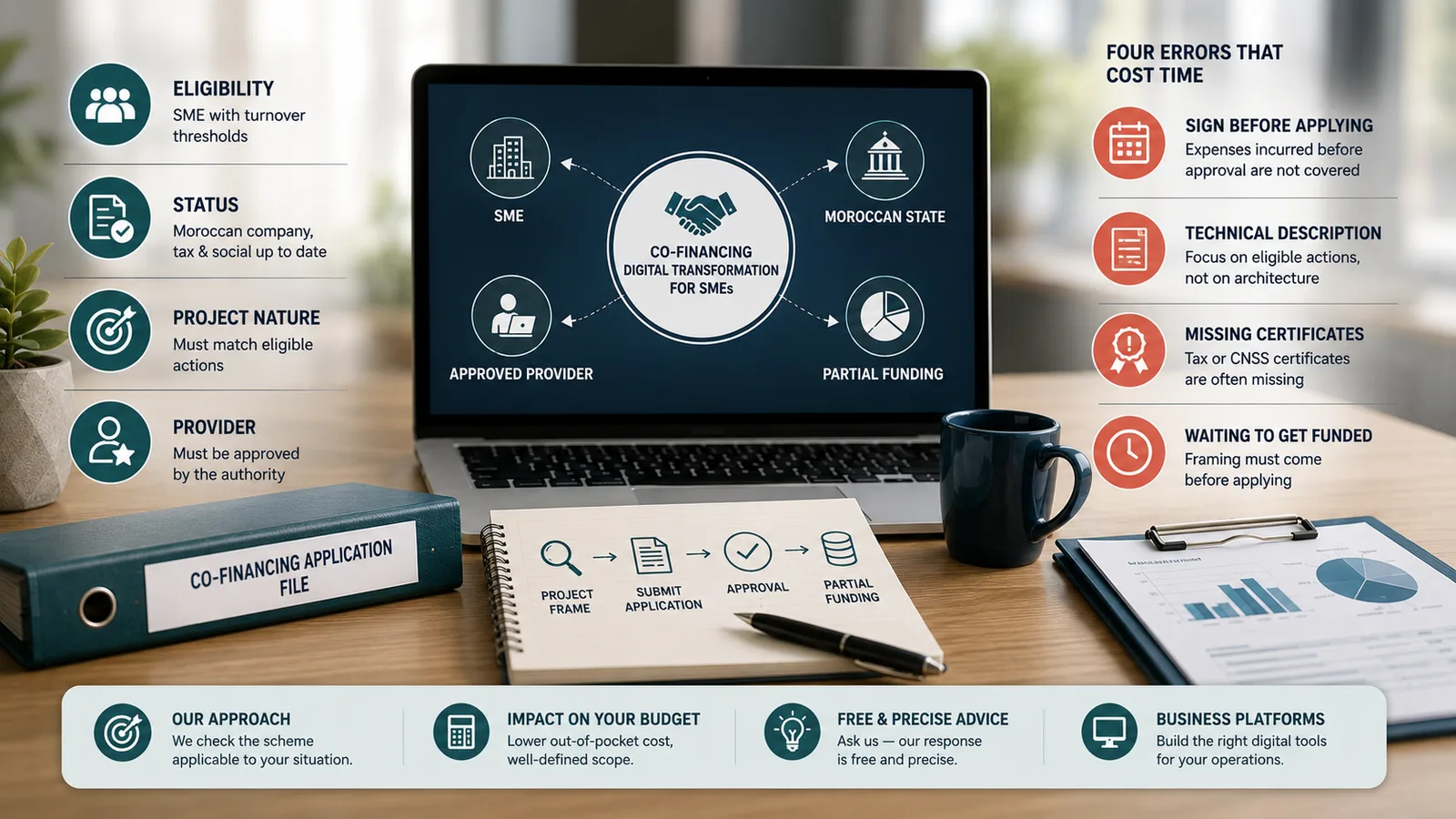
Several Moroccan public schemes co-fund digital transformation for small and medium companies. Here is the mechanism, the usual conditions, and the mistakes that waste a cycle.
Newsletter
Get our upcoming articles straight to your inbox.