Getting a digitalisation project co-funded: how it actually works
Several Moroccan public schemes co-fund digital transformation for small and medium companies. Here is the mechanism, the usual conditions, and the mistakes that waste a cycle.
The principle
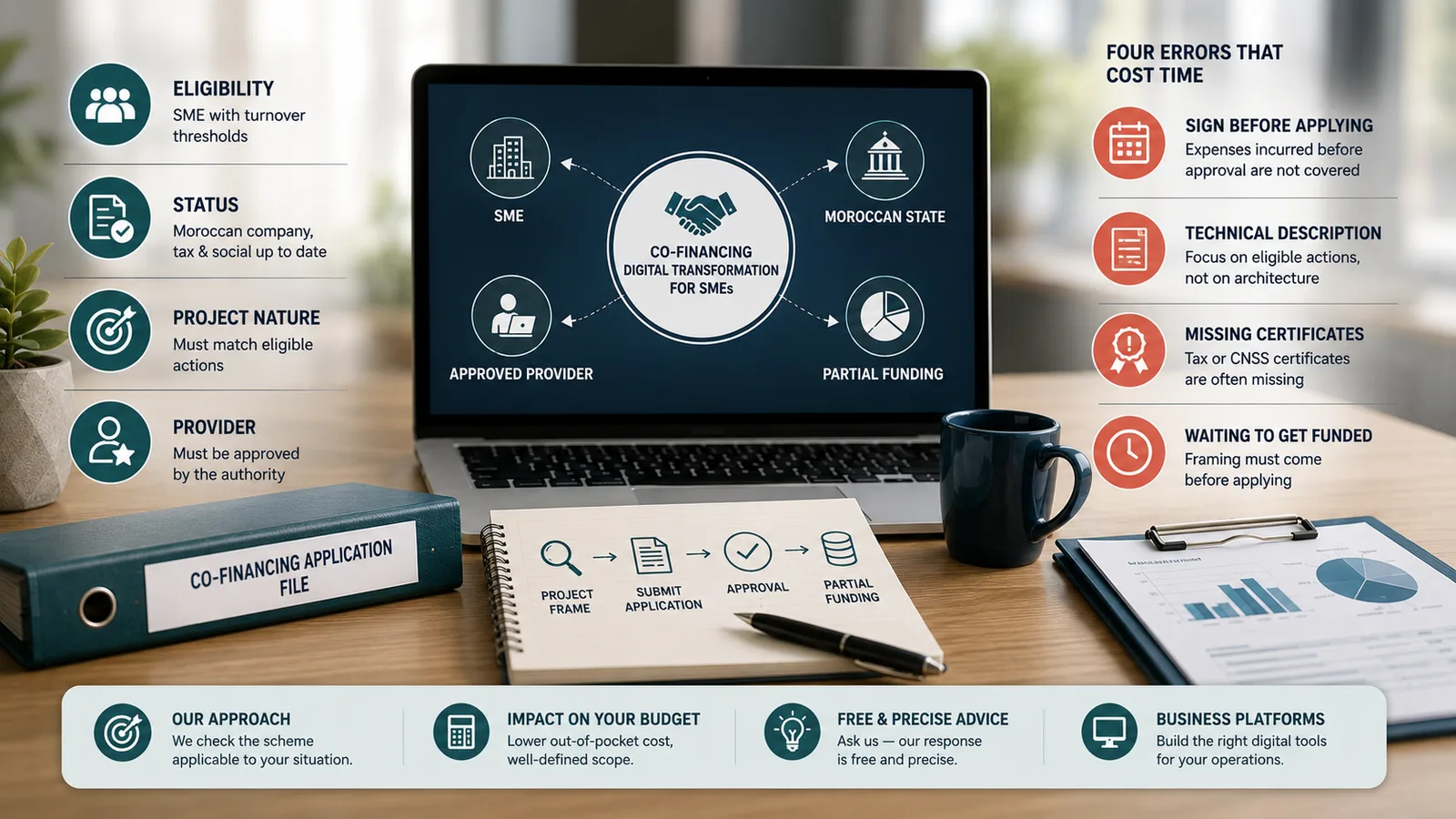
The Moroccan state co-funds digital transformation projects run by small and medium companies. The mechanism is always the same: the company owns the project, a provider delivers it, and part of the spend is covered by the scheme. Rates, ceilings and eligible expenses vary from one scheme to another.
What determines eligibility
- Company size — the schemes target small and medium companies, with turnover thresholds.
- Status — a company under Moroccan law, up to date with tax and social obligations.
- Nature of the project — fundable actions are listed; a project must map explicitly onto one.
- The provider — depending on the scheme, it must be registered with the body.
The four mistakes that cost time
- Signing before applying. Order matters: spend committed before approval is generally not covered.
- Describing the project in technical terms. The file is read by someone checking that it maps to a fundable action, not reviewing an architecture.
- Neglecting the certificates. Applications stall more often on a missing tax or social-security certificate than on their content.
- Waiting for funding before scoping. The scoping is what builds the application; the reverse does not work.
Why we do not publish a percentage here
Because the terms change, and a wrong figure in an application costs you a cycle. We would rather check the applicable scheme for your situation when you need it than display a rate that may have moved. Ask us: the answer is free and specific.
What it changes about your budget
The right question is not "what does it cost" but "what is my own share, and over what scope". Co-funding moves that line: a project that looked out of reach often becomes accessible — provided the scope is properly defined at the start. That is exactly what scoping is for. See business platforms.
Related articles
Compliance & regulation
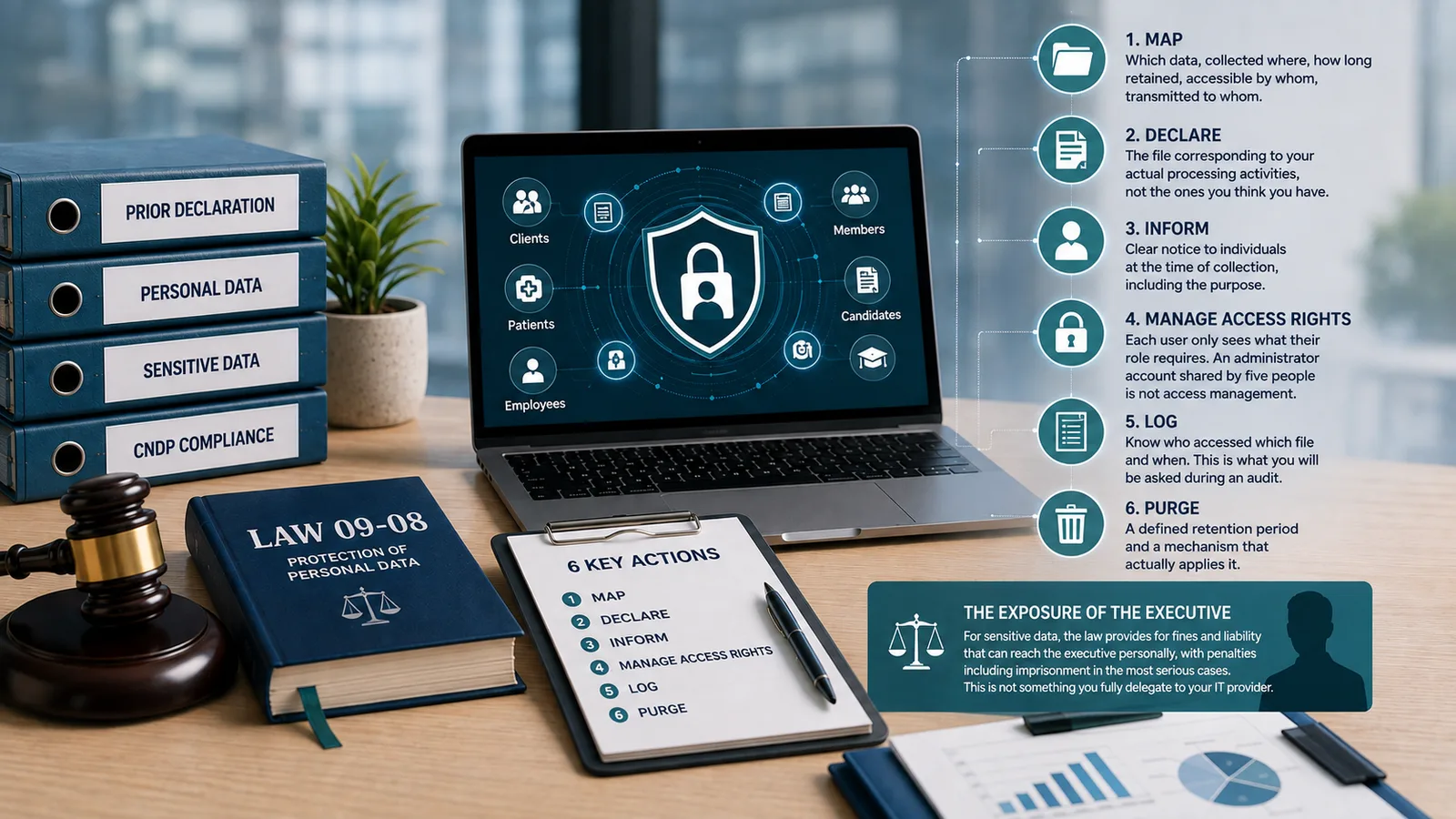
CNDP compliance: what a Moroccan company actually has to do
Morocco's data-protection authority has stepped up enforcement and explicitly names healthcare, pharmaceuticals, hospitality, e-commerce and higher education. Here are the concrete obligations — and the director's personal exposure.
Compliance & regulation
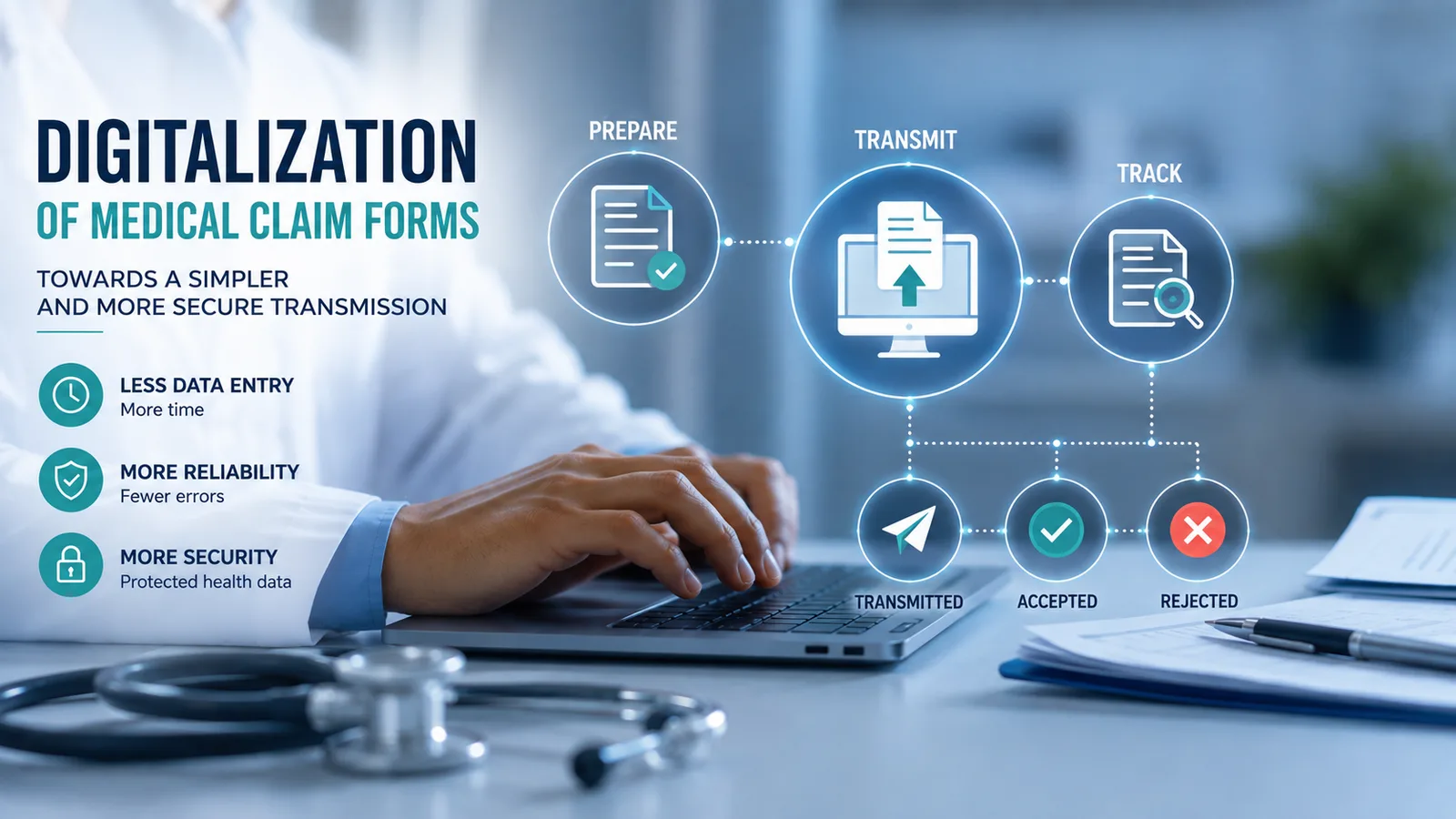
CNSS electronic care claims: what changes for clinics and laboratories in Morocco
Electronic submission is becoming the norm for doctors, pharmacists and laboratories. The important detail: it can happen through the insurer's portal, or through your own software.
Compliance & regulation
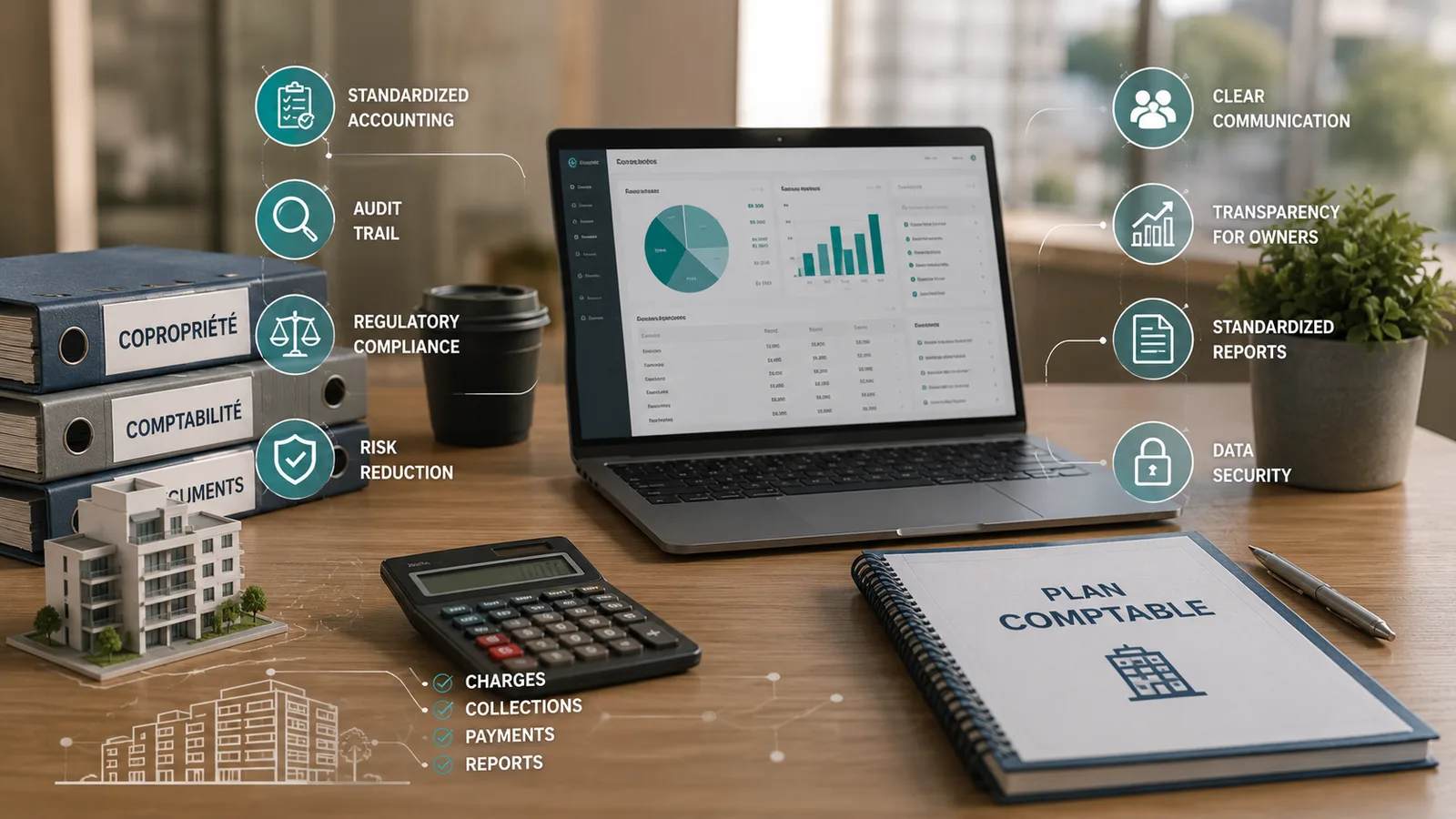
Condominium accounting in Morocco: what decree 2.23.700 requires
A decree published in the official bulletin requires standardised accounting from condominium managers, with obligations that increase according to the level of charges managed.
Newsletter
Get our upcoming articles straight to your inbox.