Lokager — Car rental management
Multi-tenant SaaS platform for vehicle rental management, designed and built to launch a new business.
The challenge
Vehicle rental companies often run their business on scattered tools — spreadsheets, generic software — leading to invoicing errors and rough fleet tracking. Our client had a clear vision: launch their own SaaS startup to address this gap at market scale, with a single platform able to serve multiple rental companies, each with its own agencies and teams.
The solution
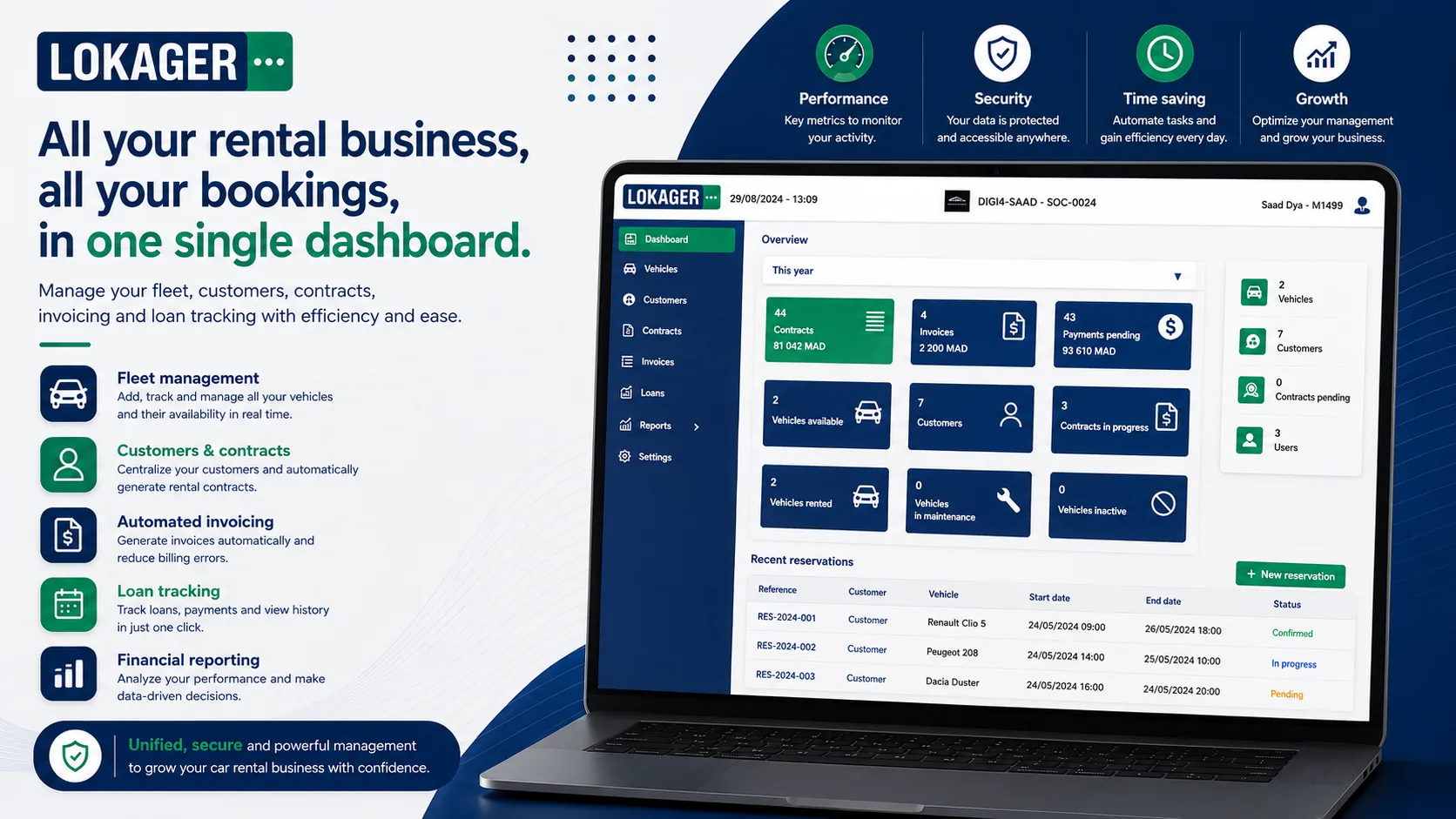
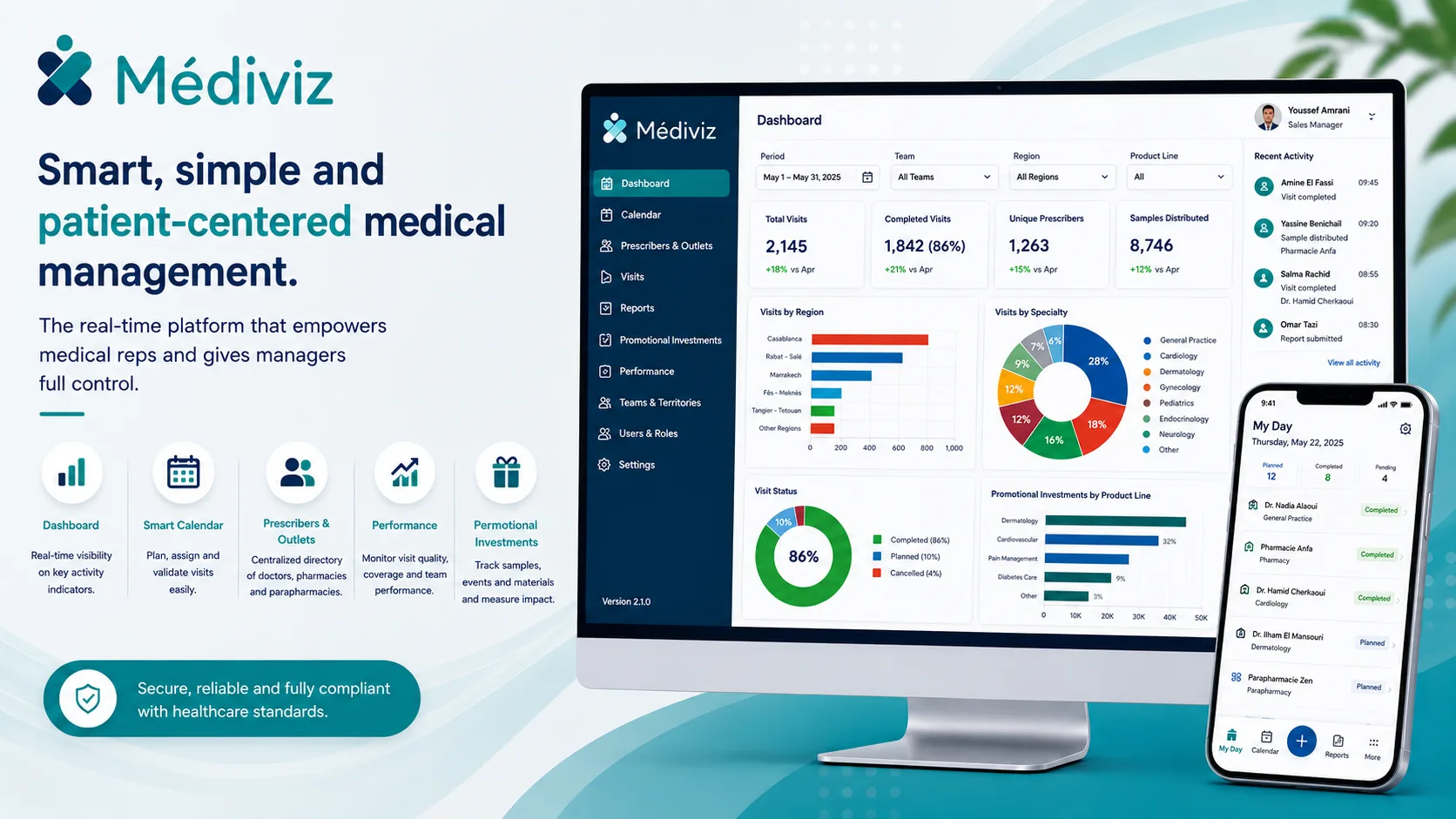
We designed and built Lokager (internal codename: Lokato): a multi-tenant SaaS platform with Angular and Node.js, where each rental company gets its own space, can create multiple agencies, and manages its agents with dedicated access rights. The platform covers the full rental cycle: fleet management with regulatory document tracking (registration card, insurance, road tax sticker, technical inspection), client management, reservations with separate pickup and return locations, and automatic contract and invoice generation. A dedicated back office lets the Lokager team manage all the companies on the platform.
This project illustrates our business platforms offer: several roles, a management back office and the integrations identified at scoping.
The results
The platform was built, launched and successfully operated by the client for 5 years, proving out a multi-tenant SaaS architecture for vehicle rental management — from the initial product vision through to real-world use by multiple rental companies.
Methodology and project management
Unlike a fixed-scope rebuild, Lokager was built as a genuine product: a first working version validated real usage with the earliest rental companies, and the platform then evolved iteratively over several years — successive versions of both backend and frontend — to adapt to the market's and users' needs.
Technical architecture and performance
The architecture is built around a multi-tenant model: each rental company has its own data scope (agencies, agents, vehicles, clients), with configurable access rights per user. Two separate Angular applications make up the ecosystem — the main app used by rental companies, and a dedicated back office letting the Lokager team manage all companies on the platform — each connected to its own Node.js API. Fleet management includes full regulatory document tracking per vehicle (registration card, authorization, insurance, road tax sticker, technical inspection), and the reservation module handles pickup and return at different locations, with automatic rate calculation based on duration.
Frequently asked questions
What is a multi-tenant SaaS architecture?
It's an architecture where multiple client organizations (here, multiple rental companies) share the same technical platform while each having its own isolated data, users and settings. This lets you serve many customers from a single codebase to maintain, rather than deploying a separate instance for each one.
How do you support launching a SaaS startup?
We start from the real business need (here, fleet and reservation management for vehicle rental companies) to design an architecture able to serve multiple customers from day one, then evolve the product iteratively as early users provide feedback.
Why a separate back office from the main application?
The main application serves rental companies day-to-day (reservations, fleet, clients, invoices), while the back office is the tool the team operating the SaaS platform uses to manage all member companies — two different audiences with two different needs, so two dedicated interfaces.

More projects

SportIQ
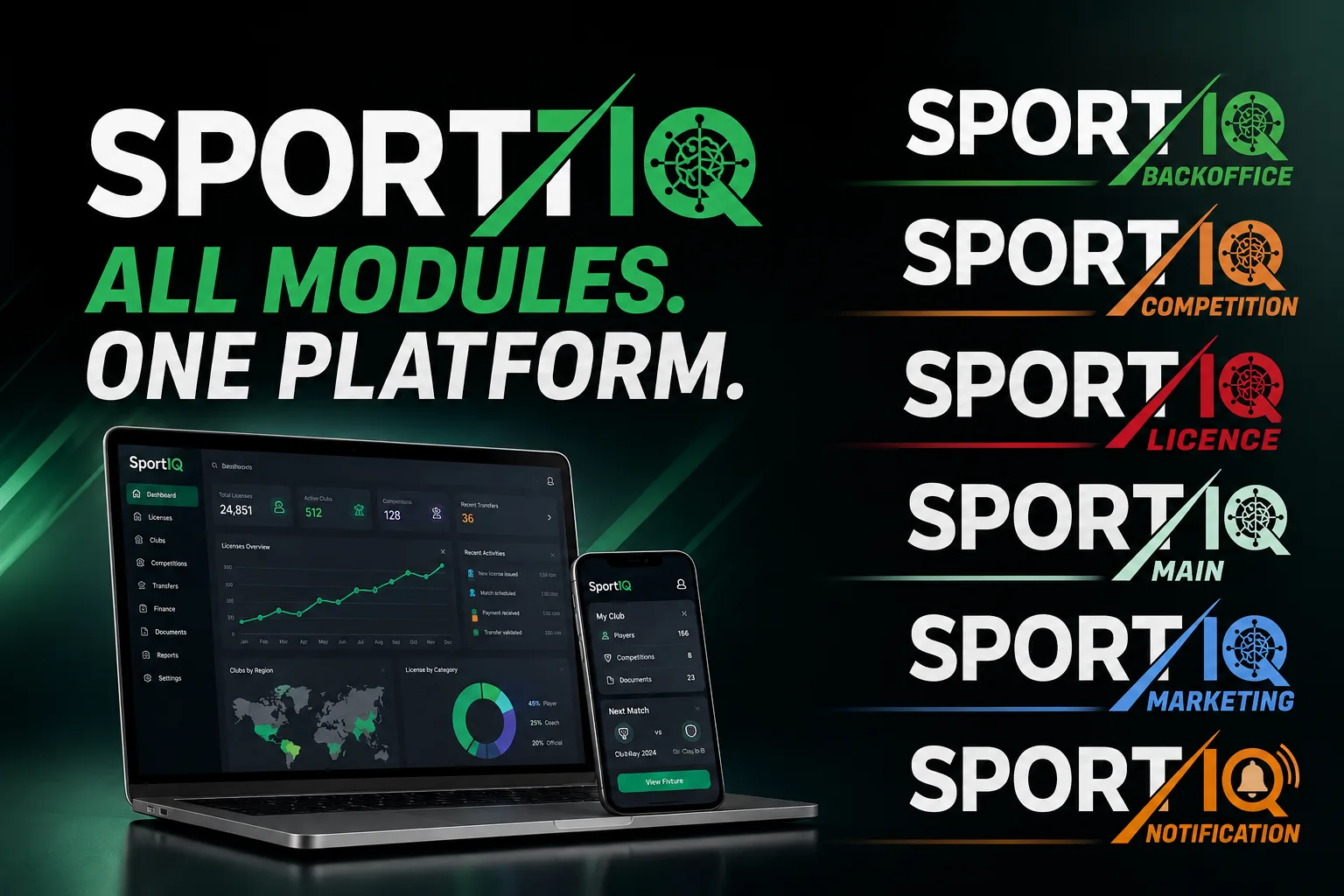
SportIQ — multi-tenant SaaS for sports federations

LA MAS
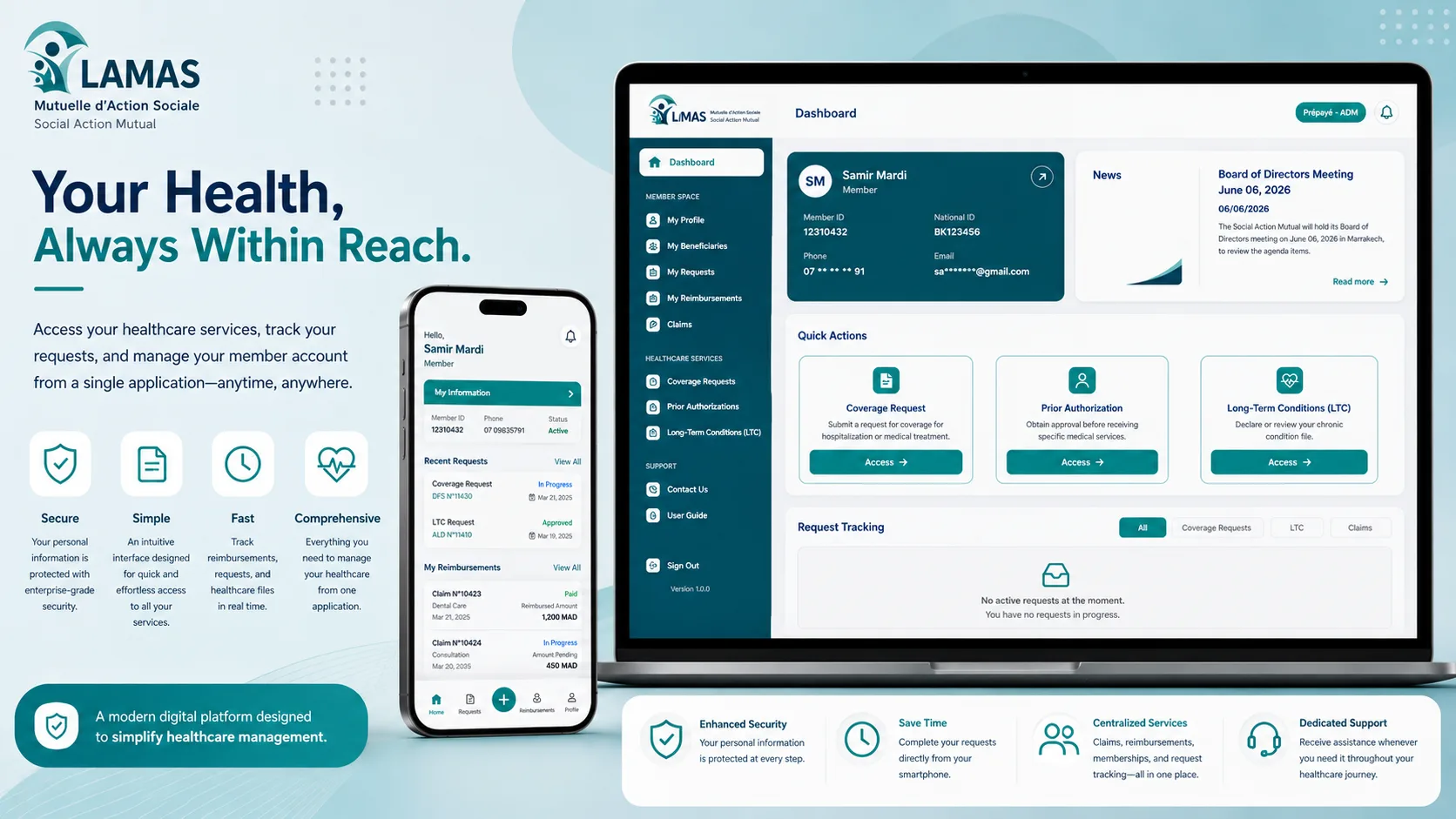
LA MAS — Health insurance management

Médiviz